20
Lele e l'arte dell'adattamento
ENGLISH
Lele and the Art of Adaptation
I arrived in Italy in October 1973. I had only a small note with me and a great deal of shyness. Written on it was a name, “Emanuele Luzzati”, and his telephone number. I wanted to do an internship as a ceramic artist, and one of Luzzati’s friends, the director Gianfranco De Bosio, had told me: “I have a friend who works with ceramics,” handing me that note almost by chance, without imagining how important it would become in my life. I didn’t know who Luzzati was, I had no idea of his reputation, and perhaps that was fortunate: not feeling intimidated allowed me to approach him naturally, without barriers. I didn’t speak Italian yet, but that wasn’t an obstacle. With Luzzati, we immediately found a common language: French. It brought us into instant communication. We soon discovered we shared many things: a love of ceramics, a connection with Jerusalem, where I had studied, and even a certain French sensibility, both cultural and personal. When I told him I wanted to work with ceramics, he immediately said he could introduce me to the world of Albissola and put me in touch with Umberto Piombino. That apparently simple gesture changed my life. At that time Lele spent much of his time in Rome, working on theatre productions and animated films. But almost every weekend he returned to Genoa, to his parents and his home. Every time he came back, he would call me and arrange to meet. Most often we met in his house, especially in his bedroom, which also served as his office: a small but lively room, with a painted wardrobe and a colourful bedspread. In the entrance hall, the walls were completely covered with bookshelves filled with books: a world of images, stories and ideas that already revealed everything about him. After six months of working in Albissola, at the Mazzotti factory, I showed him a macramé piece I had made: it was part of my own research, somewhere between tapestry and sculpture. Lele looked at it and said, “It’s a pity it can’t be used!”, because for him beauty always had a practical, useful dimension, never an end in itself. He took that work and showed it to Tonino Conte, who commissioned five costumes from me: it was my first step into the world of Italian theatre.
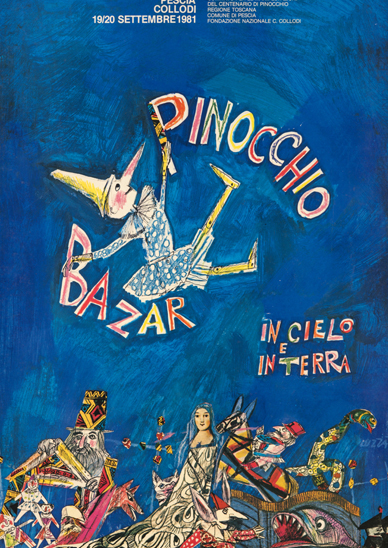
PINOCCHIO IN PESCIA
I remember one day in particular, when the Teatro della Tosse was invited to Pescia to stage Pinocchio. In the centre of the town there was a very long square, like an open corridor between the buildings. We decided to build a long theatrical catwalk suspended through the middle of the urban space. It became a great collective celebration. Apart from what we had brought with us, nothing had been prepared in advance: much of it was created on the spot. Lele had an extraordinary sense of space: after a first inspection, he could already see everything clearly in his mind. We built a large catwalk with an entrance arch made from scaffolding poles and two huge silhouettes of carabinieri welcoming the audience. Part of the performance had been prepared, while the rest was pure improvisation. We were very good at adapting: in theatre, especially outdoors, you have to be ready for every unexpected event—wind, noise, people… This applies as much to the scenery as to the actors. It is a constant risk, but also an extraordinary source of energy.
DANIÈLE SULEWIC
FRANÇAIS
Lele et l’art de l’adaptation
Je suis arrivée en Italie en octobre 1973. Je n’avais avec moi qu’un petit billet et beaucoup de timidité : dessus étaient inscrits le nom « Emanuele Luzzati » et son numéro de téléphone. Je souhaitais faire un stage de céramiste et un ami de Luzzati, le metteur en scène Gianfranco De Bosio, m’avait dit : « J’ai un ami qui a fait de la céramique », en me tendant ce billet presque par hasard, sans imaginer à quel point il serait important pour moi. Je ne savais pas qui était Luzzati, je n’avais aucune idée de sa renommée, et ce fut peut-être une chance : ne pas être intimidée m’a permis de l’aborder avec naturel, sans barrières. Je ne parlais pas encore italien, mais cela ne fut pas un obstacle. Avec Luzzati, nous avons immédiatement trouvé une langue commune : le français. Cela nous a permis de communiquer tout de suite. Nous avons vite découvert que nous partagions beaucoup de choses : l’amour de la céramique, un lien avec Jérusalem où j’avais étudié, ainsi qu’une certaine sensibilité française, tant sur le plan culturel que personnel. Lorsque je lui ai dit que je voulais travailler la céramique, il m’a aussitôt proposé de m’introduire dans le monde d’Albissola et m’a mise en contact avec Umberto Piombino. Ce geste, en apparence simple, a changé ma vie. À cette époque, Lele passait beaucoup de temps à Rome pour le théâtre et les films d’animation. Mais presque tous les week-ends, il revenait à Gênes, chez ses parents et dans sa maison. À chaque retour, il m’appelait pour fixer un rendez-vous. Le plus souvent, nous nous retrouvions chez lui, surtout dans sa chambre, qui faisait également office de bureau : une petite pièce pleine de vie, avec une armoire peinte et un couvre-lit coloré. Dans l’entrée, les murs étaient entièrement recouverts de bibliothèques remplies de livres : un univers d’images, d’histoires et de pensées qui disait déjà tout de lui. Après six mois de travail à Albissola, à la manufacture Mazzotti, je lui ai montré une œuvre en macramé que j’étais en train de réaliser : une recherche personnelle entre tapisserie et sculpture. Lele l’a regardée et a dit : « Dommage qu’on ne puisse pas s’en servir ! », car pour lui la beauté possédait toujours une dimension concrète et utile, jamais une fin en soi. Il montra cette œuvre à Tonino Conte, qui me commanda cinq costumes : ce fut mon premier pas dans le monde du théâtre italien.
PINOCCHIO À PESCIA
Je me souviens d’un jour en particulier : lorsque le Teatro della Tosse fut invité à Pescia pour mettre en scène Pinocchio. Au centre de la ville se trouvait une place très longue, comme un couloir ouvert entre les immeubles. Nous avons décidé d’y construire une longue passerelle théâtrale suspendue au cœur de l’espace urbain. Ce fut une grande fête collective. Hormis ce que nous avions apporté avec nous, rien n’était préparé à l’avance : beaucoup de choses sont nées directement sur place. Lele possédait un extraordinaire sens de l’espace : après un premier repérage, il voyait déjà tout très clairement dans son esprit. Nous avons installé une grande passerelle avec un portail d’entrée en tubes d’échafaudage et deux immenses silhouettes de carabiniers pour accueillir le public. Une partie du spectacle était préparée, mais l’autre relevait entièrement de l’improvisation. Nous étions très doués pour nous adapter : au théâtre, surtout en plein air, il faut être prêt à tous les imprévus — le vent, le bruit, les passants… Cela vaut autant pour les décors que pour les acteurs. C’est un risque permanent, mais aussi une extraordinaire source d’énergie.
DANIÈLE SULEWIC
DEUTSCH
Lele und die Kunst der Anpassung
Ich kam im Oktober 1973 nach Italien. Ich hatte nur einen kleinen Zettel bei mir und sehr viel Schüchternheit. Darauf standen ein Name – Emanuele Luzzati – und eine Telefonnummer. Ich wollte ein Praktikum als Keramikerin machen. Ein Freund Luzzatis, der Regisseur Gianfranco De Bosio, hatte zu mir gesagt: »Ich kenne jemanden, der Keramik macht«, und mir diesen Zettel beinahe beiläufig in die Hand gedrückt, ohne zu ahnen, welche Bedeutung er für mein Leben haben würde. Ich wusste nicht, wer Luzzati war. Ich kannte seinen Ruhm nicht – und vielleicht war genau das mein Glück. Weil ich mich nicht eingeschüchtert fühlte, konnte ich ihm ganz unbefangen begegnen.
Ich sprach damals noch kein Italienisch. Doch das war kein Hindernis. Mit Luzzati fanden wir sofort eine gemeinsame Sprache: Französisch. Dadurch verstanden wir uns auf Anhieb. Bald entdeckten wir viele Gemeinsamkeiten: die Liebe zur Keramik, eine Verbindung zu Jerusalem, wo ich studiert hatte, und eine gewisse französische Sensibilität – sowohl kulturell als auch menschlich. Als ich ihm erzählte, dass ich mit Keramik arbeiten wollte, sagte er sofort, er könne mir den Zugang zur Welt von Albissola ermöglichen, und brachte mich mit Umberto Piombino in Kontakt. Diese scheinbar einfache Geste veränderte mein Leben. Damals verbrachte Lele viel Zeit in Rom, wo er für Theaterproduktionen und Animationsfilme arbeitete. Fast jedes Wochenende kehrte er jedoch nach Genua zurück, zu seinen Eltern und in sein Haus. Jedes Mal rief er mich an und wir verabredeten uns. Meist trafen wir uns bei ihm zu Hause, vor allem in seinem Schlafzimmer, das zugleich als Arbeitszimmer diente: ein kleiner, aber lebendiger Raum mit einem bemalten Kleiderschrank und einer farbenfrohen Tagesdecke. Schon im Eingangsbereich waren sämtliche Wände mit Bücherregalen bedeckt. Es war eine Welt voller Bilder, Geschichten und Gedanken – und sie erzählte bereits alles über ihn. Nach sechs Monaten Arbeit in der Keramikwerkstatt Mazzotti in Albissola zeigte ich ihm eine Makramee-Arbeit, an der ich gerade arbeitete – eine persönliche künstlerische Suche zwischen Wandteppich und Skulptur. Lele betrachtete sie und sagte: »Schade, dass man sie nicht benutzen kann!« Für ihn besaß Schönheit immer auch einen praktischen, konkreten Nutzen; sie war niemals Selbstzweck. Er nahm meine Arbeit mit und zeigte sie Tonino Conte. Dieser beauftragte mich mit der Anfertigung von fünf Kostümen. Das war mein erster Schritt in die Welt des italienischen Theaters.
PINOCCHIO IN PESCIA
An einen Tag erinnere ich mich besonders. Das Teatro della Tosse war eingeladen worden, Pinocchio in Pescia aufzuführen. Im Zentrum der Stadt lag ein außergewöhnlich langer Platz – fast wie ein offener Korridor zwischen den Häusern. Wir beschlossen, mitten durch diesen Raum einen langen, erhöhten Theatersteg zu bauen. Es wurde ein großes gemeinschaftliches Fest. Abgesehen von dem Material, das wir mitgebracht hatten, war nichts vorbereitet. Vieles entstand erst vor Ort. Lele verfügte über ein außergewöhnliches Raumgefühl. Nach einer ersten Besichtigung hatte er die gesamte Inszenierung bereits vollständig vor Augen. Wir errichteten einen langen Laufsteg mit einem Eingangsportal aus Gerüstrohren und zwei riesigen Silhouetten von Carabinieri, die das Publikum begrüßten. Ein Teil der Aufführung war vorbereitet, der andere entstand vollständig aus Improvisation. Wir verstanden es hervorragend, uns den Gegebenheiten anzupassen. Im Theater – besonders unter freiem Himmel – muss man jederzeit auf Unvorhergesehenes reagieren können: Wind, Geräusche, Zuschauer … Das gilt gleichermaßen für Bühne und Schauspieler. Es ist ein ständiges Risiko, zugleich aber auch eine außergewöhnliche Quelle kreativer Energie.
DANIÈLE SULEWIC
ESPAÑOL
Lele y el arte de la adaptación
Llegué a Italia en octubre de 1973. Llevaba conmigo solo una pequeña nota y mucha timidez. En ella estaban escritos un nombre, «Emanuele Luzzati», y su número de teléfono. Quería hacer unas prácticas como ceramista y un amigo de Luzzati, el director Gianfranco De Bosio, me dijo: «Tengo un amigo que trabaja la cerámica», entregándome aquella nota casi por casualidad, sin imaginar lo importante que llegaría a ser para mí. No sabía quién era Luzzati, no tenía idea de su fama y, quizá por eso mismo, tuve suerte: no sentirme intimidada me permitió acercarme a él con total naturalidad, sin barreras. Aún no hablaba italiano, pero eso no fue un obstáculo. Con Luzzati encontramos enseguida un idioma común: el francés. Aquello nos permitió comunicarnos de inmediato. Pronto descubrimos que compartíamos muchas cosas: el amor por la cerámica, un vínculo con Jerusalén, donde yo había estudiado, y también una cierta sensibilidad francesa, tanto cultural como personal. Cuando le conté que quería dedicarme a la cerámica, me dijo inmediatamente que podía introducirme en el mundo de Albissola y me puso en contacto con Umberto Piombino. Aquel gesto, aparentemente sencillo, cambió mi vida. En esa época Lele pasaba mucho tiempo en Roma, dedicado al teatro y al cine de animación. Pero casi todos los fines de semana regresaba a Génova, a casa de sus padres y a su hogar. Cada vez que volvía me llamaba para vernos. La mayoría de las veces nos encontrábamos en su casa, sobre todo en su dormitorio, que también hacía las veces de despacho: una habitación pequeña pero llena de vida, con un armario pintado y una colcha de vivos colores. En la entrada, las paredes estaban completamente cubiertas de estanterías repletas de libros: un universo de imágenes, historias y pensamientos que ya hablaba de quién era él. Tras seis meses trabajando en la fábrica Mazzotti de Albissola, le mostré una obra de macramé en la que estaba trabajando: una investigación personal a medio camino entre el tapiz y la escultura. Lele la observó y dijo: «¡Qué lástima que no tenga un uso!», porque para él la belleza siempre debía tener también una dimensión práctica y concreta, nunca ser un fin en sí misma. Tomó aquella obra y se la enseñó a Tonino Conte, quien me encargó cinco vestuarios. Fue mi primer paso en el mundo del teatro italiano.
PINOCCHIO EN PESCIA
Recuerdo especialmente un día, cuando el Teatro della Tosse fue invitado a Pescia para representar Pinocchio. En el centro de la ciudad había una plaza muy larga, como un corredor abierto entre los edificios. Decidimos construir una larguísima pasarela teatral suspendida en medio del espacio urbano. Fue una gran celebración colectiva. Salvo lo que habíamos llevado con nosotros, nada estaba preparado de antemano: gran parte nació allí mismo. Lele tenía un extraordinario sentido del espacio: tras una primera inspección, ya veía todo perfectamente en su mente. Montamos una gran pasarela con un portal de entrada hecho con tubos de andamio y dos enormes siluetas de carabineros para dar la bienvenida al público. Una parte del espectáculo estaba preparada, pero la otra era pura improvisación. Éramos muy buenos adaptándonos: en el teatro, especialmente al aire libre, hay que estar preparados para cualquier imprevisto —el viento, el ruido, la gente…—. Esto vale tanto para la escenografía como para los actores. Es un riesgo constante, pero también una extraordinaria fuente de energía.
DANIÈLE SULEWIC
DANIÈLE SULEWICindice
WebDesign & Content by Paroledavendere - Engineered by Pulsante
DATA WEB AGENCY
advent-c v2.0